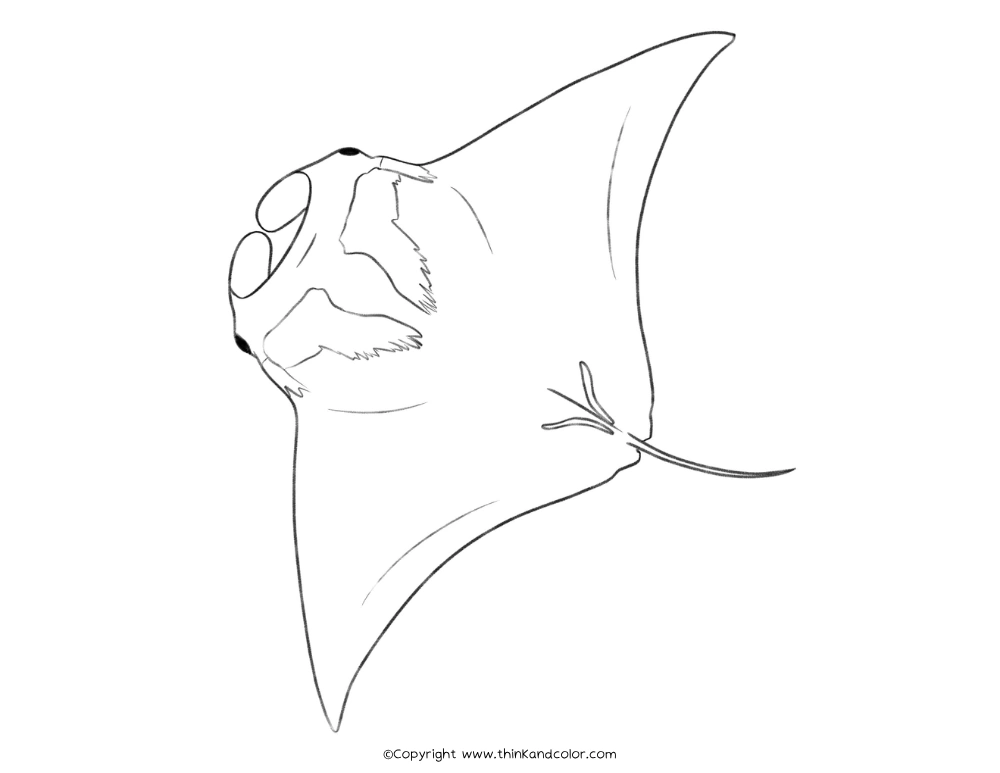
Ray Coloring Pages
Last Updated:
Rays are remarkable marine animals known for their flattened bodies, broad fins, and graceful movements through the water. They come in many forms, from enormous manta rays that travel through the open ocean to stingrays and skates that spend much of their time close to the seafloor.
Our Ray Coloring Pages collection introduces children to these unusual fish through printable illustrations and educational activities. Coloring different ray species provides an opportunity to notice their distinctive body shapes, tails, fins, patterns, and other features while discovering how they live underwater.
Types of Rays
Educational Coloring Pages
Discover with Our Ray Coloring Pages
Rays have some of the most distinctive body designs found among marine animals. Instead of the familiar streamlined shape of many fish, their bodies are generally flattened, with large pectoral fins spreading outward like wings.
Despite their unusual appearance, rays are fish. They belong to the group of cartilaginous fish, which also includes sharks. Their skeletons are made mainly of cartilage rather than bone. Different ray species have developed their own shapes and adaptations according to the environments in which they live.
What Makes Rays Unique?
The broad fins of a ray are one of its most noticeable characteristics. These fins extend along the sides of the body and provide much of the animal’s movement. Manta rays and some other species use graceful, flapping motions to travel through open water, while many bottom-dwelling rays move their fins in waves as they glide over the seafloor.
Another interesting feature is the position of the mouth. In many rays, the mouth is located underneath the body. This arrangement is particularly useful for species that search the seafloor for food.
Rays also possess specialized sensory systems. Like sharks, they can detect weak electrical signals produced by other animals. This ability can help them locate prey even when it is hidden beneath sand or other sediment.
Exploring Different Rays
The word “ray” describes a diverse collection of animals rather than one single body type. A giant manta ray can have an enormous wingspan and spend much of its time swimming through the open ocean, while a stingray may remain close to the bottom and search through sand for food.
Electric rays have another unusual adaptation: specialized organs that can generate electrical discharges. Skates resemble stingrays in some ways but have important differences, including their body and tail structures.
Looking at several ray species side by side allows children to identify similarities while discovering how dramatically their shapes and lifestyles can differ.
Where Do Rays Live?
Rays inhabit a wide range of marine environments. Many species are associated with sandy or muddy seafloors, where their flattened bodies allow them to remain close to the bottom. Others live around reefs, coastal waters, or estuaries.
Manta rays have a very different lifestyle from many bottom-dwelling rays. They are active swimmers that can travel through the open ocean while feeding on tiny organisms suspended in the water.
A ray’s surroundings influence its appearance and behavior. Its body shape, feeding method, movement, and coloration can all be connected to the environment in which it spends its life.
How Rays Are Adapted to Ocean Life
A ray’s flattened form is particularly useful for life underwater. Species that spend time on the seafloor can remain close to the sediment while searching for prey, while their broad fins allow them to maneuver through the water.
Some rays can partially bury themselves in sand, leaving only certain parts of their bodies exposed. This can provide camouflage and allow them to remain concealed from potential predators.
Feeding strategies also differ considerably. Some rays use strong jaws and teeth to crush hard-shelled animals such as mollusks and crustaceans. Manta rays have a very different approach, filtering tiny organisms from the water as they swim.
Rays in the Ocean Food Web
Rays interact with many other organisms as both predators and prey. Depending on the species, they may consume crustaceans, mollusks, small fish, worms, plankton, and other marine organisms.
Their feeding activities can also affect the communities around them. Bottom-feeding rays disturb sediment as they search for food, while larger rays occupy different positions within marine food webs.
At the same time, rays themselves can be hunted by larger ocean predators. These relationships make rays part of the larger network of interactions that keeps marine ecosystems functioning.
Why Learn About Rays?
Rays provide an excellent introduction to animal adaptations because their bodies look so different from those of many familiar fish. Their fins, flattened bodies, sensory abilities, and feeding structures all demonstrate how animals can develop specialized features for particular ways of life.
They are also useful for teaching children that closely related animals do not necessarily look alike. Comparing a manta ray, stingray, skate, and electric ray reveals a surprising range of forms within the same broader group.
Ray coloring pages can therefore combine creativity with lessons about marine biology, habitats, anatomy, animal behavior, and ecosystems.
Learn While You Color
A ray coloring page can become a simple observation activity. Ask children to identify the animal’s fins, eyes, mouth, tail, and body shape before they begin coloring. They can then think about how each feature might help the animal survive.
After coloring, children can create an environment for their ray. A manta ray might be surrounded by open water and plankton, while a stingray could be placed over a sandy seafloor.
Older children can take the activity further by researching the species shown on the page and adding labels for its habitat, diet, size, or special adaptations.
Tips for Making Coloring Time Even Better
Study the ray’s shape. Before reaching for the crayons, examine the illustration carefully. Ask children why they think the animal has such wide fins and how those fins might help it move.
Build a seafloor habitat. For bottom-dwelling species, add sand, rocks, shells, seagrass, and small marine animals to the picture.
Make a ray comparison chart. Choose several ray species and record differences in their body shape, habitat, diet, and size.
Experiment with camouflage. Give children a ray to color and ask them to choose colors that could help it blend into sand, rocks, or another underwater environment.
Make a marine-life gallery. Once several pages are finished, arrange them together and identify each species. Children can add a small fact card beside each illustration.
Frequently Asked Questions
Are these ray coloring pages free?
Yes! The ray coloring pages are available as free printable activities for personal and educational use.
How do I print the ray coloring pages?
Choose a ray coloring page, open the printable file, and print it using your home, school, or classroom printer.
What types of rays are included?
The collection can include different kinds of rays, such as manta rays, stingrays, eagle rays, electric rays, and skates.
Are these ray coloring pages suitable for all ages?
Yes. Ray illustrations can be used by children of different ages, with simpler pictures working well for younger children and more detailed designs providing a longer coloring activity for older children.
Can I use these ray coloring pages in my classroom?
Yes. They can complement lessons about marine animals, fish, ocean habitats, animal adaptations, and ecosystems.
Do you have ray worksheets too?
The ray collection can be expanded with educational activities involving anatomy, vocabulary, habitats, life cycles, tracing, handwriting, and other marine-life topics.
Are rays fish?
Yes. Rays are fish belonging to the cartilaginous fish group. Their skeletons are made primarily of cartilage rather than bone.
What do rays eat?
Their diets depend on the species. Different rays may feed on animals such as crustaceans, mollusks, worms, fish, or plankton.
Are all rays dangerous?
No. Rays have very different behaviors and adaptations. Some species possess defensive structures such as a venomous spine, while others, such as manta rays, are filter feeders that consume tiny organisms.
How are rays different from sharks?
Both rays and sharks are cartilaginous fish, but their body designs are quite different. Rays generally have broad pectoral fins and flattened bodies, while most sharks have more cylindrical, streamlined bodies.
Can I download the ray coloring pages as PDFs?
Yes. The printable pages can be provided in PDF format for convenient use at home or in educational settings.
What paper is best for ray coloring pages?
Regular printer paper works well with crayons and colored pencils. Thicker cardstock can be useful when children are using markers, paint, or other wet coloring materials.